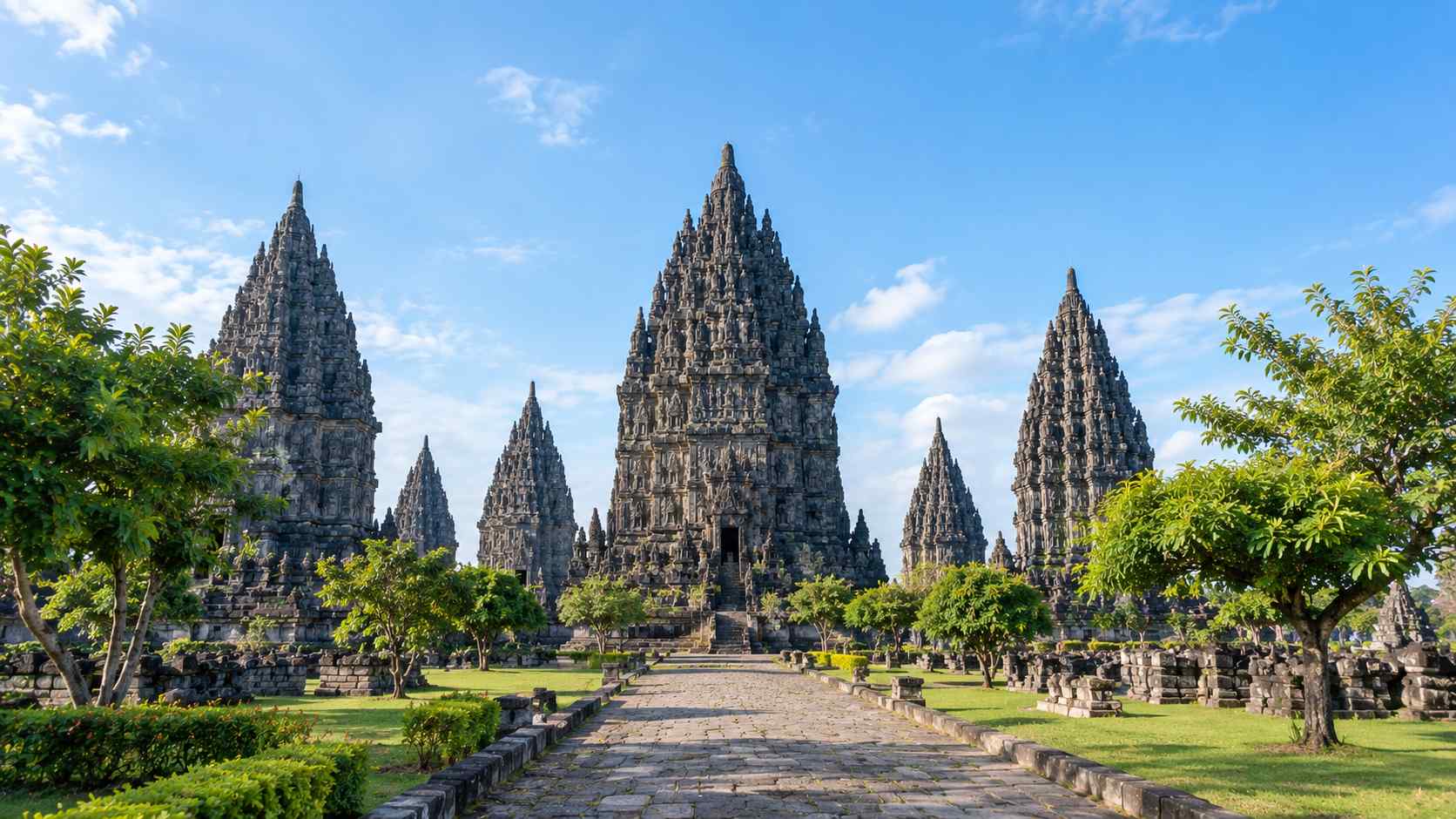
The Prambanan temple stone tells a story of land, craft, and time. Builders chose volcanic andesite, a hard stone that suited both towering walls and delicate carving. However, many visitors never think about the material beneath the carvings. Therefore, this guide explains what andesite is, why builders used it, and how it ages. Moreover, it shares tips for noticing the stone during your visit.
What Is Andesite
Andesite is a volcanic rock formed from cooled lava. It appears across Java because of the island’s many volcanoes. As a result, builders could find it close to the temple site. In addition, the stone is dense and strong, which makes it suitable for large structures. For wider background, read this guide on Prambanan temple architecture explained for curious travelers.
Why Builders Chose It
Several qualities made andesite a smart choice. First, it holds fine detail, so carvers could create delicate faces and hands. Next, it resists weather better than softer stone. Moreover, local supply reduced the cost and effort of transport. Consequently, the material supported both ambition and craft.
Prambanan Temple Stone in the Walls
Workers cut blocks to similar sizes and stacked them in tight layers. Therefore, the walls look neat and strong. Furthermore, the surface color ranges from gray to dark brown, which gives the compound a calm, earthy tone. In bright light, the stone also reflects heat, so the platform can feel hot at midday.
Carving the Stone
After stacking, craftsmen carved the details. The even texture of andesite lets them create smooth curves and sharp lines. As a result, many figures remain clear after more than a thousand years. In addition, shadows play across the carved surfaces and reveal depth.
How the Stone Ages
Rain, heat, and moss slowly change the surface. Moreover, earthquakes crack and move blocks. Consequently, restorers study each stone and try to return it to its original place. When pieces are missing, they sometimes use new stone, which looks slightly lighter at first. Over time, however, the color blends in.
Caring for the Stone
Oils and moisture from hands can harm the surface. Therefore, visitors should avoid touching the carvings. Likewise, climbing on structures can cause damage. In addition, following site rules helps preserve the monument for future travelers.
Tips for Noticing the Stone
Visit early or late for soft light that highlights texture. Look at the joints, the color changes, and the lighter patches that mark repairs. Wear light, modest clothing and closed shoes with good grip, and bring water, a hat, and sunscreen. Because access rules can change, confirm current details before you go.
Plan Your Visit with Local Experts
That is why Borobudur Tours can help. Their team offers organized packages, experienced guides, and flexible options for couples, families, and groups. As a result, you can learn what each surface reveals.
Conclusion
The Prambanan temple stone links volcano, craft, and devotion. Consequently, looking closely at andesite makes the monument feel even more alive. In addition, a guide helps you read the story written in its surface.
Ready to see it yourself? Visit Borobudur Tours today and reserve your trip for an unforgettable day.