Borobudur Buddhist Cosmology gives the monument much of its spiritual meaning. The temple does not simply rise through several architectural levels. Its base, square terraces, circular platforms, reliefs, and stupas create a symbolic model of the Buddhist universe. As visitors move upward, the design represents a journey from desire toward the formless realm.
The Three Realms of Borobudur
UNESCO explains Borobudur through three Buddhist realms: Kamadhatu, Rupadhatu, and Arupadhatu. Each realm corresponds to a different part of the monument.
Kamadhatu represents the realm of desire. The base of Borobudur expresses this stage. It reflects a condition where worldly desires still influence human actions.
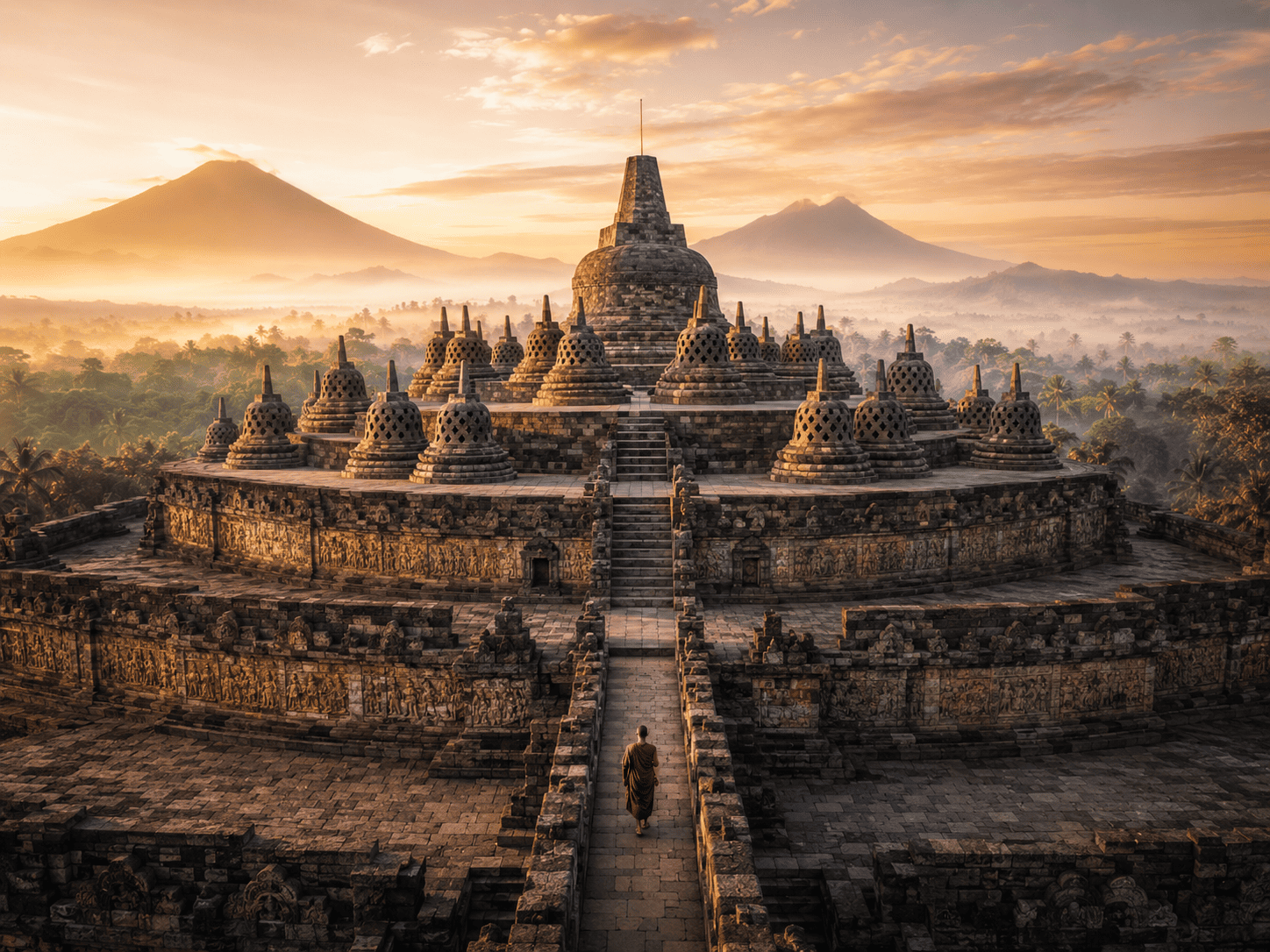
Rupadhatu represents the realm of form. Five square terraces form this middle section. At this stage, people move beyond desire but still remain connected to name and physical form.
Arupadhatu represents the realm of formlessness. Three circular platforms and the large central stupa form this upper section. The architecture becomes more open and simple as visitors reach this level.
Why Does the Architecture Change?
Borobudur uses architecture to make Buddhist cosmology visible. The lower and middle sections contain walls, galleries, reliefs, and many carved figures. These features create a detailed visual environment.
Higher up, the design changes. Circular terraces replace square galleries. Repeated stupas and open space create a quieter atmosphere.
This gradual shift supports the idea of spiritual progress. Visitors move physically upward while the monument becomes less visually complex. The journey therefore connects movement, space, and Buddhist teaching.
For more background, read our guide to facts about Borobudur Temple. It explains the monument’s history, architecture, Buddhist meaning, and important details.
Reliefs and the Spiritual Journey
Borobudur’s reliefs add another layer to its cosmological design. The galleries contain Buddhist stories, moral lessons, and scenes from human life.
Visitors traditionally move around the galleries before climbing to the next level. This route encourages reflection as they progress through the monument. The detailed stories fit naturally within the realms where form still plays an important role.
The higher terraces remove much of this narrative detail. Instead, visitors encounter open space and repeated stupas.
The Meaning of the Upper Stupas
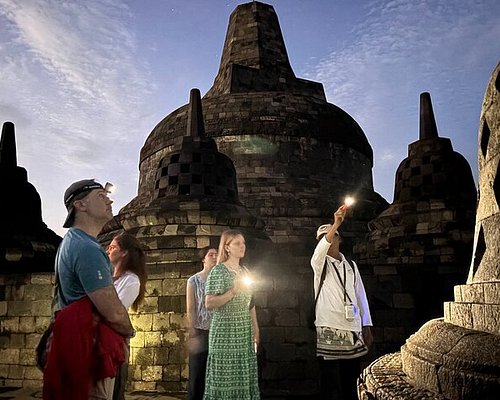
UNESCO records 72 openwork stupas around the three circular platforms. Each stupa contains a Buddha image. A larger monumental stupa stands at the center.
These structures belong to the Arupadhatu section. Their repeating forms create order, balance, and visual simplicity. The central stupa completes the upward architectural sequence.
The transition from detailed reliefs to open terraces helps visitors see how Borobudur expresses Buddhist ideas through design rather than words alone.
How to Experience Borobudur Cosmology
Do not rush directly to the highest terrace. Start from the lower sections and notice how the surroundings change as you climb.
A local guide can explain how each level connects with Buddhist cosmology. Travelers who want deeper context can choose a private Borobudur tour from Yogyakarta. Guided exploration can help connect the architecture, reliefs, Buddha images, and stupas into one clear story.
Take time to observe the difference between square and circular forms. These changes form part of the monument’s spiritual message.
Conclusion
Borobudur Buddhist Cosmology transforms the temple into a symbolic representation of the Buddhist universe. Kamadhatu represents desire, Rupadhatu represents form, and Arupadhatu represents formlessness.
The upward journey links architecture with spiritual development. Once visitors understand these three realms, the terraces, reliefs, and stupas reveal a deeper purpose beyond their visual beauty.